For the last few months, I seem to be providing workshops at least once, twice even three times a week to parents and teachers of Galway schools on the growing problem of Cyberbullying.
No longer is intimidation of children by their peers and others
confined to the school playground or the street. The mobile phone &
the Internet has brought this danger into the home and into the bedroom,
areas once regarded as places of sanctuary.
Online Social Networks such
as Facebook have been highly beneficial technologies to humankind. But
their use particularly by children has oftentimes degenerated into these
sites becoming sources of fear and harassment.
This phenomena began in
the 1990s with mobile phone texting.
As Outreach Officer at DERI, I
provide parents with guidelines on how to identify and to tackle
cyberbullying. I actually recommend them to join Facebook and similar
OSN's which in a small way acts as a positive deterrent to their own
sons and daughters abusing these facilities. I also educate adults on
protecting their children from Internet porn. But at the end of the day,
I tell them what is needed first and foremost is good old-fashioned
active parenting. There is no substitute for the latter.
My Writings (I hope!) reflect my Guiding Principles: -'Enjoy Life to the Utmost but not at other people's expense'-'Think Global, Act Local'-'Variety is the Spice of Life'-'Use Technology & Wisdom to Make the World A Better Place for All God's Creatures'-'Do Not Accept Injustice No Matter Where You Find It'-'Laughter is the Best Medicine'
Time to Strip Bertie Ahern & his fellow Political Lackeys of All Their Taxpayer-funded Pensions & Perks
As holder of some of the most important offices of state, Bertie Ahern abused his powers as a democratically-elected politician for personal gain and that of his 'property speculator' friends of the 'FF Galway Tent'. But he was not the only one as the level of corruption was endemic in the 'body politic'. Time now to strip him, Padraig Flynn and their cohorts of all their taxpayer-funded pensions & perks. Time now to do likewise to those Ministers of the last government that sold our country to benefit so-called 'developers', greedy bankers and incompetent top civil servants.
These politicians are traitors. liars and thieves who betrayed the electorate of this country.
Read Irish Times article about the lies perpetrated by Ahern
These politicians are traitors. liars and thieves who betrayed the electorate of this country.
Read Irish Times article about the lies perpetrated by Ahern
The Non-Irish Origins of St. Patrick's Day & 'All Things Irish'!
St. Patrick’s Day is Ireland’s national holiday and understandably
St. Patrick himself is looked on as the personification of all that is Irish.
It is probably the only holiday specifically associated with one nation that is celebrated with gusto in countries across the globe, with prominent streets and buildings on so many continents being decked out in Emerald Isle Green.
Yet St. Patrick himself and so many of the traditions associated with the Festival have their origins far beyond our green shamrock shores.
So for instance:
1. St. Patrick- British & Roman!
St. Patrick himself was actually Romano-British, the son of a Roman official that was taken as a slave by Irish sea raiders probably from near Carlisle (at Hadrian’s Wall) in northern Britain in the early 5th century. Even his adopted name is not Gaelic, coming from the Latin term ‘Patricius' (noble).
Yet, as we say in Ireland, the invader/foreigner oftentimes becomes 'more Irish than the Irish themselves' (except for a few Northern Unionists!). Though sent as a prisoner to Ireland & forced to work as a slave looking after sheep in the mountains, Patrick decided to voluntarily return to Ireland as a Christian missionary years after his escape from captivity.
2.
Guinness- Invented by Londoners & with some later support from the British Army!
'Guinness' was copied by Arthur Guinness from an 18th century London drink made out of roasted barley. The beer was known as ‘porter’ because it was originally popular with the porters (carriers) in Covent Garden. Arthur Guinness switched from producing the more common ale at his Dublin brewery. However Guinness was initially not well received with Dubliners because of the owner’s support for the British colonial regime and his opposition to the republican United Irishman during the rebellions of the late 1790s.
Guinness’ international reputation had also a lot to do with the British Army! In WW1, the high-energy consumption ‘porter’ breweries in mainland Britain were closed down by the government to concentrate the national energy resources on the armament production factories. However Guinness and the porter breweries in Ireland were allowed to stay open thus giving them a virtual trade monopoly in the then British Empire that stretched across five continents.
3. Irish Pub- Viking roots!
The 'Irish pub' was actually created by Viking invaders in the 9th century in their new slave-trading settlements of Dublin, Cork, Limerick etc. Common to all these Viking cities was the presence of a 'tavern' where Vikings, after grueling days or months spent fighting, raiding, pillaging or trading could come to enjoy the delights of beer, music and food served by gorgeous-looking Celtic wenches.
Over a thousand years later (in 1996), I returned the favour to our Viking brethren by managing the first Irish pub in Iceland- ‘The Dubliner’ in Reykjavik! (pubs were only legalized in that country in 1989)
4.
'St. Patrick's Day Festival Parade’ -an American invention!
It originated in the mid-18th century American cities of Boston and New York where it was created by Irish Americans longing for their homeland and an opportunity to promote their heritage. The first parade took place in New York on March 17th in 1762 when it was led by Irish soldiers serving in the British Army! By the 19th century, it had became a powerful expression of Irish nationalism and the struggle against British colonial rule in Ireland.
New York's Parade for Indian & Irish Independence
Interestingly, the New York Parade of 1920 took on a more cosmopolitan anti-imperial flavour as it became a huge demonstration for Indian as well as Irish independence with Indian republicans carrying large banners emblazoned with messages such as '315,000,000 of India with Ireland to the Last'and 'President De Valera's Message to India: Our cause is a common cause.'

5. Irish Whiskey -the essence of the Middle East!
The process of creating whiskey(from the Gaelic 'uisce beatha' = 'water of life') - 'distillation' was learnt from Coptic or Arab alchemists by studious Celtic monks. The former used it for medicinal purposes. However, we Irish soon saw its greater significance in the hospitality and entertainment sectors!
6. Sexy Irish Traditional Dancing- another American invention!
Traditional Irish step dancing only gained an international appeal in the 1990s thanks primarily to the efforts of an American, Michael Flatley.
This Irish-American from Chicago created the choreography for the 'Riverdance' show and, with fellow lead dancer Jean Butler, led the show to amazing success as the intermission act in the Eurovision Song Contest in 1994. Irish step dancing has never looked back since and Riverdance has generated a myriad of successful offshoots. Not only that, but the dour unsmiling
Irish dancers of previous eras were transformed into vivacious high-kicking Irish cailíní and buachaillí in figure-hugging attire. Furthermore, modern Irish dance now unashamedly embraces elements from other cultures (Russia, Arabian) increasing its international appeal even further.
Michael Flatley portrayed all that was good and important about Irish-Americans. When Irish traditions were dying out in the Emerald Isle, it was they that for centuries nurtured and kept alive the flame of Celtic culture.
7.
There is no such thing as Irish 'Craic'!
The term 'Craic' is looked on today as an Irish word denoting a quintessentially Irish form of fun (drink, music, amusing & friendly conversation).
In fact there was no such word in the Gaelic Language until the 1970s. It is actually an old English(!) word spelt 'crack' that meant in Elizabethan times 'to boast', 'to banter' or 'to tell a joke' as in the term 'to crack a joke'.
8. 'Irish Coffee'- invented for the benefit of American tourists suffering from the Irish weather!
On one cold evening in 1942 at a small windswept airport terminal on the west coast
of
Ireland, the local chef felt pity for the tired and freezing passengers
who had just embarked from a seaplane that had to turn back from its
trans Atlantic journey due to atrocious weather conditions.
Being Americans, he knew that they would enjoy a cup of hot coffee (not then much consumed by Irish people) topped with fresh cream. But because of the freezing conditions, he decided to spice it up with a shot of Irish whiskey. Legend has it that one of the passengers, remarking on the unusual taste of this drink asked, "Hey Buddy, is this Brazilian coffee?", to which the chef Joe Sheridan replied, 'No, that's Irish coffee'. And so, history was made!
9. Irish Songs-written by English, Americans, Scots & Australians!
Many
of those great 'traditional Irish' ballad songs that are sung with such
gusto every night by broken-hearted inebriated Galwegians or Dubliners
in some Irish pub across the world were in fact written by English,
Scotch, Australian or American!
10. Irish Traditional Music- reinvented by British Punks
It was a London-based Punk group of mixed English & Irish background that shook Irish music to its foundations and re-invented it for a modern Western youth audience. The anti-establishment Pogues, led by their brilliant lead singer and lyricist Shane MacGowan, that revitalised Irish music and brought vibrancy, youthfulness, relevancy and radical politics back into a staid Irish music scene.
Formed in 1982, the inventors of Celtic Punk fused traditional Irish folk with contemporary English punk and rock.
The name 'Pogues' comes from Pogue Mahone, the anglicisation of the Irish 'póg mo thóin,' meaning "kiss my ass".
As with Riverdance, their music was oftentimes condemned by the native Irish purists who preferred to keep Celtic culture in a sealed box untainted by outside forces.
Silly people! Like all cultures, Irish traditions are ever-changing, are constantly borrowing and being re-shaped by external influences.
11. The Irish Potato- Brought to Ireland from North America by English colonists
More than any other food item, the potato is associated with Ireland. Today it is a central element of Irish cuisine with a myriad of traditional recipes associated with this root crop, ranging from Boxty (Irish Potato Griddle Cakes), potato soup, Dublin Coddle to Colcannon. Particularly from the early 1800s, it became the staple diet of the Irish people.
Because of its high nutritional value and its ability to be grown abundantly on poor soils, the majority of the impoverished native peasantry planted this vegetable on the miserable patches of lands left to them by their new lords and masters, the British ruling elite, who had conquered and colonised Ireland during the wars of the 16th-18th centuries, transforming the countryside in the process into grazing and tillage lands to provide livestock and grain for the British market. Over dependency on the potato in the 19th century sadly had dire consequences when potato blights led to mass starvation, death and emigration particularly in the Great Famine (an Gorta Mór = the Big Hunger) of the 1840s.
However the potato was introduced into Ireland only in the late 16th century from North America, probably by English soldier and adventurer Sir Walter Raleigh on his estates in county Waterford that had been awarded to him from lands seized from Irish rebels. Raleigh is mostly remembered today for popularising another crop from the the New World, namely tobacco. However his legacy in Ireland is somewhat different and will be forever associated with colonising Irish lands with English settlers and American spuds.
12. Claddagh Ring- African Origins of the Irish Symbol of Love
The Claddagh ring (Fáinne Chladaigh in Irish) is internationally renowned as a traditional Irish token of friendship, love, or marriage. It is called after the fishing village of Claddagh ('Cladach' = stony beach in Irish), now a suburb of Galway city on the west coast of Ireland.
Each element of this distinctive metal ring has symbolic meaning: the hands represents friendship, the crown loyalty, and the heart love. If the ring is placed on the right hand with the heart turned outwards, it means that the wearer is "unattached". When the heart is turned inwards, it is a sign that he or she is married or in a permanent relationship.
Many famous people have worn it including the British Queen Victoria, Hollywood actor Gabriel Byrne, film producer Walt Disney and US President Bill Clinton.
It has appeared in popular television programmes including Friends, and in Buffy the Vampire Slayer where the character Angel (who was an Irishman in a previous life) presents Buffy with a Claddagh ring on her birthday saying “My people – before I was changed – they exchanged this as a sign of devotion. It’s a Claddagh ring. The hands represent friendship, the crown loyalty…and the heart….well you know…..wear it with the heart pointing towards you it means you belong to somebody."
All wore the ring in the belief that it is a authentic Love Symbol from ancient Ireland.
Yet its origins probably lie in North Africa, in the white slave trade practiced by the fierce Moorish pirates in what was then known as the Barbary (Barbarian) Coast.
According to legend Richard Joyce, from British occupied Ireland, was captured by Muslim pirates on a ship traveling to the slave plantations of British West Indies. Sold like many hundreds of thousands of captured Europeans in a slave market in Morocco or Algeria, he was bought by a kindly goldsmith from Algiers who taught him the skills of his trade during his 14 years of captivity.
Under a peace treaty during the reign of King William III, Richard was released along with all other British prisoners. In spite of being offered riches and a daughter in marriage by his former master. Richard returned to Galway. Equipped with his new metalwork skills and designs, he became a successful goldsmith. It is said that he presented the first Claddagh ring to a lover that had remained faithful to him during his long years in captivity.
13. Easter 1916 - Ireland's greatest rebellion against British Imperial Rule- Led by a Scotsman, an Englishman, an American and the English-born wife of A Polish Count
The Easter 1916 Rising is probably the most celebrated rebellion against British colonial rule in Ireland. Though it ended in failure, it was the catalyst for the larger scale guerrilla warfare campaign of the Irish Republican Army (IRA) that commenced in January 1919 and became known as the War of Independence which led to the establishment of the Irish Free State and the end of British rule in 26 counties of the 32 counties of Ireland.
Yet interestingly, many of the rebel leaders were foreign-born, evidenced of the extent and influence of the Irish Diaspora. The chief planner of the rebellion, Tomas Clarke was born in the Isle of Wright, England; James Connolly the internationally renowned socialist and overall commander, was born in Edinburgh Scotland; Éamon DeValera, commandant of the Boland Mills unit, was born in New York to a Cuban father; Constance Georgine Markievicz (neé Gore Booth) second in command of the St. Stephen's Green rebel forces was born in London and married a Polish aristocrat Count Casimir Markievicz from what is now Ukraine. The father of Pádraig Pearse, the Commander in Chief of the overall rebellion and the person most associated with the Rising was from Birmingham.
14. Ireland's Picturesque Landscapes of Green Fields & Stone Walls - A Product of British Conquest & Colonisation
A rural landscape comprising a mosaic of little green fields and a network of drystone walls is the image that many foreigners have of Ireland and its ancient Celtic past and rural traditions. In fact the fields and walls were largely created by British colonists and merchants from the early seventeenth century onwards when, after the defeat of Gaelic clans, the huge forests that covered much of the country were cut down to provide fuel for the English ironworks, timber to build ships for the imperial navy, tillage and pasture lands for the production of crops and livestock for export to the English homelands.
A traditional Irish (honest!) Toast
In honour of the day itself, may I send you all an old and heartfelt Irish blessing:
"May your glass be ever full,
May the roof over your head be always strong,
And may you be in heaven
half an hour before the devil knows you're dead!"
St. Patrick himself is looked on as the personification of all that is Irish.It is probably the only holiday specifically associated with one nation that is celebrated with gusto in countries across the globe, with prominent streets and buildings on so many continents being decked out in Emerald Isle Green.
Yet St. Patrick himself and so many of the traditions associated with the Festival have their origins far beyond our green shamrock shores.
So for instance:
1. St. Patrick- British & Roman!
St. Patrick himself was actually Romano-British, the son of a Roman official that was taken as a slave by Irish sea raiders probably from near Carlisle (at Hadrian’s Wall) in northern Britain in the early 5th century. Even his adopted name is not Gaelic, coming from the Latin term ‘Patricius' (noble).
Yet, as we say in Ireland, the invader/foreigner oftentimes becomes 'more Irish than the Irish themselves' (except for a few Northern Unionists!). Though sent as a prisoner to Ireland & forced to work as a slave looking after sheep in the mountains, Patrick decided to voluntarily return to Ireland as a Christian missionary years after his escape from captivity.
2.
Guinness- Invented by Londoners & with some later support from the British Army!'Guinness' was copied by Arthur Guinness from an 18th century London drink made out of roasted barley. The beer was known as ‘porter’ because it was originally popular with the porters (carriers) in Covent Garden. Arthur Guinness switched from producing the more common ale at his Dublin brewery. However Guinness was initially not well received with Dubliners because of the owner’s support for the British colonial regime and his opposition to the republican United Irishman during the rebellions of the late 1790s.
Guinness’ international reputation had also a lot to do with the British Army! In WW1, the high-energy consumption ‘porter’ breweries in mainland Britain were closed down by the government to concentrate the national energy resources on the armament production factories. However Guinness and the porter breweries in Ireland were allowed to stay open thus giving them a virtual trade monopoly in the then British Empire that stretched across five continents.

The 'Irish pub' was actually created by Viking invaders in the 9th century in their new slave-trading settlements of Dublin, Cork, Limerick etc. Common to all these Viking cities was the presence of a 'tavern' where Vikings, after grueling days or months spent fighting, raiding, pillaging or trading could come to enjoy the delights of beer, music and food served by gorgeous-looking Celtic wenches.
Over a thousand years later (in 1996), I returned the favour to our Viking brethren by managing the first Irish pub in Iceland- ‘The Dubliner’ in Reykjavik! (pubs were only legalized in that country in 1989)
4.
'St. Patrick's Day Festival Parade’ -an American invention!It originated in the mid-18th century American cities of Boston and New York where it was created by Irish Americans longing for their homeland and an opportunity to promote their heritage. The first parade took place in New York on March 17th in 1762 when it was led by Irish soldiers serving in the British Army! By the 19th century, it had became a powerful expression of Irish nationalism and the struggle against British colonial rule in Ireland.
New York's Parade for Indian & Irish Independence
Interestingly, the New York Parade of 1920 took on a more cosmopolitan anti-imperial flavour as it became a huge demonstration for Indian as well as Irish independence with Indian republicans carrying large banners emblazoned with messages such as '315,000,000 of India with Ireland to the Last'and 'President De Valera's Message to India: Our cause is a common cause.'

5. Irish Whiskey -the essence of the Middle East!
The process of creating whiskey(from the Gaelic 'uisce beatha' = 'water of life') - 'distillation' was learnt from Coptic or Arab alchemists by studious Celtic monks. The former used it for medicinal purposes. However, we Irish soon saw its greater significance in the hospitality and entertainment sectors!
6. Sexy Irish Traditional Dancing- another American invention!Traditional Irish step dancing only gained an international appeal in the 1990s thanks primarily to the efforts of an American, Michael Flatley.
This Irish-American from Chicago created the choreography for the 'Riverdance' show and, with fellow lead dancer Jean Butler, led the show to amazing success as the intermission act in the Eurovision Song Contest in 1994. Irish step dancing has never looked back since and Riverdance has generated a myriad of successful offshoots. Not only that, but the dour unsmiling
Irish dancers of previous eras were transformed into vivacious high-kicking Irish cailíní and buachaillí in figure-hugging attire. Furthermore, modern Irish dance now unashamedly embraces elements from other cultures (Russia, Arabian) increasing its international appeal even further.
Michael Flatley portrayed all that was good and important about Irish-Americans. When Irish traditions were dying out in the Emerald Isle, it was they that for centuries nurtured and kept alive the flame of Celtic culture.
7.
There is no such thing as Irish 'Craic'!The term 'Craic' is looked on today as an Irish word denoting a quintessentially Irish form of fun (drink, music, amusing & friendly conversation).
In fact there was no such word in the Gaelic Language until the 1970s. It is actually an old English(!) word spelt 'crack' that meant in Elizabethan times 'to boast', 'to banter' or 'to tell a joke' as in the term 'to crack a joke'.
8. 'Irish Coffee'- invented for the benefit of American tourists suffering from the Irish weather!
On one cold evening in 1942 at a small windswept airport terminal on the west coast
of
Ireland, the local chef felt pity for the tired and freezing passengers
who had just embarked from a seaplane that had to turn back from its
trans Atlantic journey due to atrocious weather conditions.Being Americans, he knew that they would enjoy a cup of hot coffee (not then much consumed by Irish people) topped with fresh cream. But because of the freezing conditions, he decided to spice it up with a shot of Irish whiskey. Legend has it that one of the passengers, remarking on the unusual taste of this drink asked, "Hey Buddy, is this Brazilian coffee?", to which the chef Joe Sheridan replied, 'No, that's Irish coffee'. And so, history was made!
9. Irish Songs-written by English, Americans, Scots & Australians!
Many
of those great 'traditional Irish' ballad songs that are sung with such
gusto every night by broken-hearted inebriated Galwegians or Dubliners
in some Irish pub across the world were in fact written by English,
Scotch, Australian or American!
(Click on song title below to hear the song)
For instance Dirty Old Town (that many mistakenly believe refers to Dublin) was written by the (Scottish-) English socialist folk singer Ewan MacColl; From Clare to Here by English singer songwriter Ralph McTell; Willie McBride/Green Fields of France by Scottish Australian Eric Bogle; Danny Boy by English lawyer Fred Weatherly; My Wild Irish Rose and When Irish Eyes are Smiling by New York Broadway star Chauncey Olcott; and the late great Johnny Cash wrote Forty Shades of Green10. Irish Traditional Music- reinvented by British Punks

It was a London-based Punk group of mixed English & Irish background that shook Irish music to its foundations and re-invented it for a modern Western youth audience. The anti-establishment Pogues, led by their brilliant lead singer and lyricist Shane MacGowan, that revitalised Irish music and brought vibrancy, youthfulness, relevancy and radical politics back into a staid Irish music scene.
Formed in 1982, the inventors of Celtic Punk fused traditional Irish folk with contemporary English punk and rock.
The name 'Pogues' comes from Pogue Mahone, the anglicisation of the Irish 'póg mo thóin,' meaning "kiss my ass".
As with Riverdance, their music was oftentimes condemned by the native Irish purists who preferred to keep Celtic culture in a sealed box untainted by outside forces.
Silly people! Like all cultures, Irish traditions are ever-changing, are constantly borrowing and being re-shaped by external influences.
11. The Irish Potato- Brought to Ireland from North America by English colonists
More than any other food item, the potato is associated with Ireland. Today it is a central element of Irish cuisine with a myriad of traditional recipes associated with this root crop, ranging from Boxty (Irish Potato Griddle Cakes), potato soup, Dublin Coddle to Colcannon. Particularly from the early 1800s, it became the staple diet of the Irish people.
Because of its high nutritional value and its ability to be grown abundantly on poor soils, the majority of the impoverished native peasantry planted this vegetable on the miserable patches of lands left to them by their new lords and masters, the British ruling elite, who had conquered and colonised Ireland during the wars of the 16th-18th centuries, transforming the countryside in the process into grazing and tillage lands to provide livestock and grain for the British market. Over dependency on the potato in the 19th century sadly had dire consequences when potato blights led to mass starvation, death and emigration particularly in the Great Famine (an Gorta Mór = the Big Hunger) of the 1840s.However the potato was introduced into Ireland only in the late 16th century from North America, probably by English soldier and adventurer Sir Walter Raleigh on his estates in county Waterford that had been awarded to him from lands seized from Irish rebels. Raleigh is mostly remembered today for popularising another crop from the the New World, namely tobacco. However his legacy in Ireland is somewhat different and will be forever associated with colonising Irish lands with English settlers and American spuds.
The Claddagh ring (Fáinne Chladaigh in Irish) is internationally renowned as a traditional Irish token of friendship, love, or marriage. It is called after the fishing village of Claddagh ('Cladach' = stony beach in Irish), now a suburb of Galway city on the west coast of Ireland.
Each element of this distinctive metal ring has symbolic meaning: the hands represents friendship, the crown loyalty, and the heart love. If the ring is placed on the right hand with the heart turned outwards, it means that the wearer is "unattached". When the heart is turned inwards, it is a sign that he or she is married or in a permanent relationship.
Many famous people have worn it including the British Queen Victoria, Hollywood actor Gabriel Byrne, film producer Walt Disney and US President Bill Clinton.
It has appeared in popular television programmes including Friends, and in Buffy the Vampire Slayer where the character Angel (who was an Irishman in a previous life) presents Buffy with a Claddagh ring on her birthday saying “My people – before I was changed – they exchanged this as a sign of devotion. It’s a Claddagh ring. The hands represent friendship, the crown loyalty…and the heart….well you know…..wear it with the heart pointing towards you it means you belong to somebody."
All wore the ring in the belief that it is a authentic Love Symbol from ancient Ireland.
Yet its origins probably lie in North Africa, in the white slave trade practiced by the fierce Moorish pirates in what was then known as the Barbary (Barbarian) Coast.
According to legend Richard Joyce, from British occupied Ireland, was captured by Muslim pirates on a ship traveling to the slave plantations of British West Indies. Sold like many hundreds of thousands of captured Europeans in a slave market in Morocco or Algeria, he was bought by a kindly goldsmith from Algiers who taught him the skills of his trade during his 14 years of captivity.
Under a peace treaty during the reign of King William III, Richard was released along with all other British prisoners. In spite of being offered riches and a daughter in marriage by his former master. Richard returned to Galway. Equipped with his new metalwork skills and designs, he became a successful goldsmith. It is said that he presented the first Claddagh ring to a lover that had remained faithful to him during his long years in captivity.
13. Easter 1916 - Ireland's greatest rebellion against British Imperial Rule- Led by a Scotsman, an Englishman, an American and the English-born wife of A Polish Count
The Easter 1916 Rising is probably the most celebrated rebellion against British colonial rule in Ireland. Though it ended in failure, it was the catalyst for the larger scale guerrilla warfare campaign of the Irish Republican Army (IRA) that commenced in January 1919 and became known as the War of Independence which led to the establishment of the Irish Free State and the end of British rule in 26 counties of the 32 counties of Ireland.

Yet interestingly, many of the rebel leaders were foreign-born, evidenced of the extent and influence of the Irish Diaspora. The chief planner of the rebellion, Tomas Clarke was born in the Isle of Wright, England; James Connolly the internationally renowned socialist and overall commander, was born in Edinburgh Scotland; Éamon DeValera, commandant of the Boland Mills unit, was born in New York to a Cuban father; Constance Georgine Markievicz (neé Gore Booth) second in command of the St. Stephen's Green rebel forces was born in London and married a Polish aristocrat Count Casimir Markievicz from what is now Ukraine. The father of Pádraig Pearse, the Commander in Chief of the overall rebellion and the person most associated with the Rising was from Birmingham.
14. Ireland's Picturesque Landscapes of Green Fields & Stone Walls - A Product of British Conquest & Colonisation
A rural landscape comprising a mosaic of little green fields and a network of drystone walls is the image that many foreigners have of Ireland and its ancient Celtic past and rural traditions. In fact the fields and walls were largely created by British colonists and merchants from the early seventeenth century onwards when, after the defeat of Gaelic clans, the huge forests that covered much of the country were cut down to provide fuel for the English ironworks, timber to build ships for the imperial navy, tillage and pasture lands for the production of crops and livestock for export to the English homelands.
A traditional Irish (honest!) ToastIn honour of the day itself, may I send you all an old and heartfelt Irish blessing:
"May your glass be ever full,
May the roof over your head be always strong,
And may you be in heaven
half an hour before the devil knows you're dead!"
Rediscovering its Green Grassroots - Galway city's "Féile Padraig" !
Thanks to the vision and energies of this year's organiser Caroline McDonagh aided by artistic coordinator Jen Hesnan, the St. Patrick Day's Parade 2012 will have for the first time a distinctive eco-Green and Community ethos as well as an even stronger more flamboyant artistic dimension.
It will also include an increased traditional Gaelic cultural presence as expressed in dance, music and story, an element which had almost disappeared from the event over the last decade. (See previous article here). This was so disappointing as it was like having a Brazilian Mardi Gras carnival without including Salsa.
This Celtic ambiance will wonderfully complement the cosmopolitan mix of multi-ethnic traditions that will also be participating which will give due recognition to the population diversity of modern Ireland.
In advance of Saturday's parade, the stunning Notre Dame University Marching Band complete with their enthusiastic cheerleaders will be thrilling crowds in the city centre on Thursday March 15th. Known as 'The Fighting Irish', they are one of the very best football bands in the United States.
Over the last few months, Caroline has sent out the call to neighbourhood, resident, youth, community and environmental groups to participate in Ireland's National Day of Celebration.
The community of the Ballinfoile Mór locality has accepted her challenge and has four groups participating.
As well as having one the city's most colourful musical band on the parade, Scoil San Phroinsias will also feature the junior pupils dressed up as giant vegetables and fruits.
The fourth year students of Scoil Bhride Menlo will present a moving forest.
There will be a final meeting of volunteers at 7pm on Friday March 16th in the Cumann na bhFear premisses at Unit 1B in the Sandy Road Business Park to complete the floats and costumes for both the Ballinfoile Mór Community Organic Garden and the Cumann na bhFear (Men’s Shed Movement) for the St. Patrick’s Day Parade.
Over the last year, the community-based activities of the garden and the Men’s Shed have served as role models for other neighborhoods and residents groups to emulate.
So let us continue to inspire others by having a good presence in the parade!
Hence, more than anything else, we need the maximum number of people marching in this parade. Imagine the sight of an army of urban gardeners dressed in straw hats armed with wheelbarrows, spades and rakes accompanied by a working Blacksmith's Forge (on a float), with locally-constructed bee hives and repaired farm implements being carried along by the Men’s Shed group walking and cycling together through the streets of Galway being watched by tens of thousands of Galwegians and visitors as well as millions across the world!!
So we are asking all lovers of local communities and the environment to make every effort to attend tomorrow’ meeting. Bring along friends and family and pass the word around!
The more participation we get the better for all!
Retro Video Games & Classic Science Fiction Comics Expo at NUI Galway To Celebrate 40th anniversary of Computer Gaming
Panel in the Computer and Communications Museum of
Ireland, DERI, NUI Galway
A special event
in NUI Galway on Friday will celebrate the 40th anniversary of the
birth of popular computer gaming when the Computer and Communications Museum of
Ireland, located in the Digital Enterprise Research Institute (DERI), will host
a ‘Retro Games’ extravaganza.
Members of the general public are invited along to enjoy the wonders
of classic games including Asteroids, Pacman, Space Invaders, Sonic the
Hedgehog and Earthworm Jim on legendary consoles and computers such as the Sega
Mega Drive, Nintendo, Atari, Amiga
and the Commodore 64.
The sights and
sounds on offer will capture the essence of the early days of computer gaming
of the 1970s and 1980 which made a major contribution in the overall development
of digital sound and graphics.
Of particular significance will be the showing
of ‘Pong’, the first commercially successful video game, released in 1972 by a then
new American company called Atari Inc. which was primarily responsible for the
formation of the computer game and video arcade industries.
Attendees will
also be introduced to the software coding that constitutes the games and will
be able therefore to gain an insight into how digital technology actually
works.
There will also
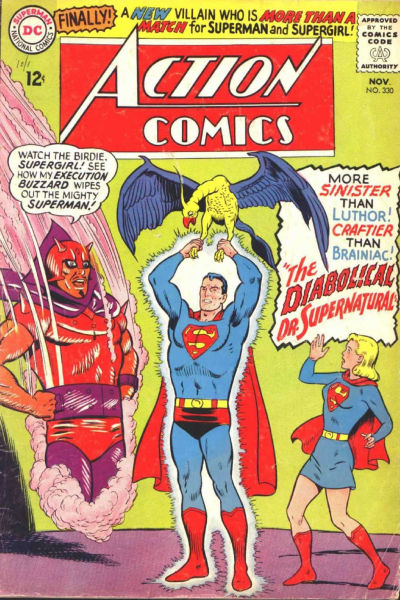
be displays of American and European 1960s science fiction comics and
memorabilia including Star Trek, Thunderbirds, Green Lantern, Thor and the Avengers. Today's children can relate to many of these fictitious characters as they are making a welcome return to modern day cinema.
1960s Science Fiction Comics:
Influencing Social Change & Inspiring Scientific &
Technology Innovation
Science Fiction has inspired generations of young people to invent
future technologies from robotics to space stations.
This was particularly
evident in the 1960s when manned space travel began with Soviet cosmonaut Yuri Gagarin becoming the first human to
journey into outer space on 12th April 1961. Before the decade had ended, mankind
had landed on the Moon.
On July 20th 1969,
American astronauts Neil Armstrong and Buzz Aldrin stepped onto its surface
from the Lunar module Eagle.
Space travel captured the imagination of youth and the 1960s witnessed
an explosion of popular science fiction worldwide that embraced comics, films,
television programmes and toys.
In the United States, Marvel
and DC comics created a myriad of
super–heroes that appealed to a young readership because of their exciting
adventures across distant galaxies that promised an often benign future where
interplanetary travel would become a characteristic of high tech societies.
For the first time, children read about civilisations where women as well as boys and girls particularly teenagers fought
battles for truth and justice.
Females heroines such as Wonder Woman and
teenagers such as Saturn Girl and the
X-Men were as prominent in science
fiction as adult males such as Iron Man
and Hawkman.
For the first time, super-heroes did not have to have by definition the
perfect physiques. A number of the genre had disabilities such as blindness (Daredevil) and heart defects (Iron Man).
There was a realisation too that mankind’s attitudes and technologies
were endangering the health of the planet, the destruction of other species and
of humanity itself. This environmental message features prominently in comics
such as the Sub Mariner and in films
such as the Planet of the Apes (1969)
and Soylent Green (1973).
In recent years, there has been a remarkable rebirth in these classic
super heroes thanks to CGI (Computer-generated imagery). Films such as Thor and Green Lantern were box-office
successes in 2011 and this year sees the return of the Avengers.
Galway city Coderdojo Club Promotes Father and Son Bonding
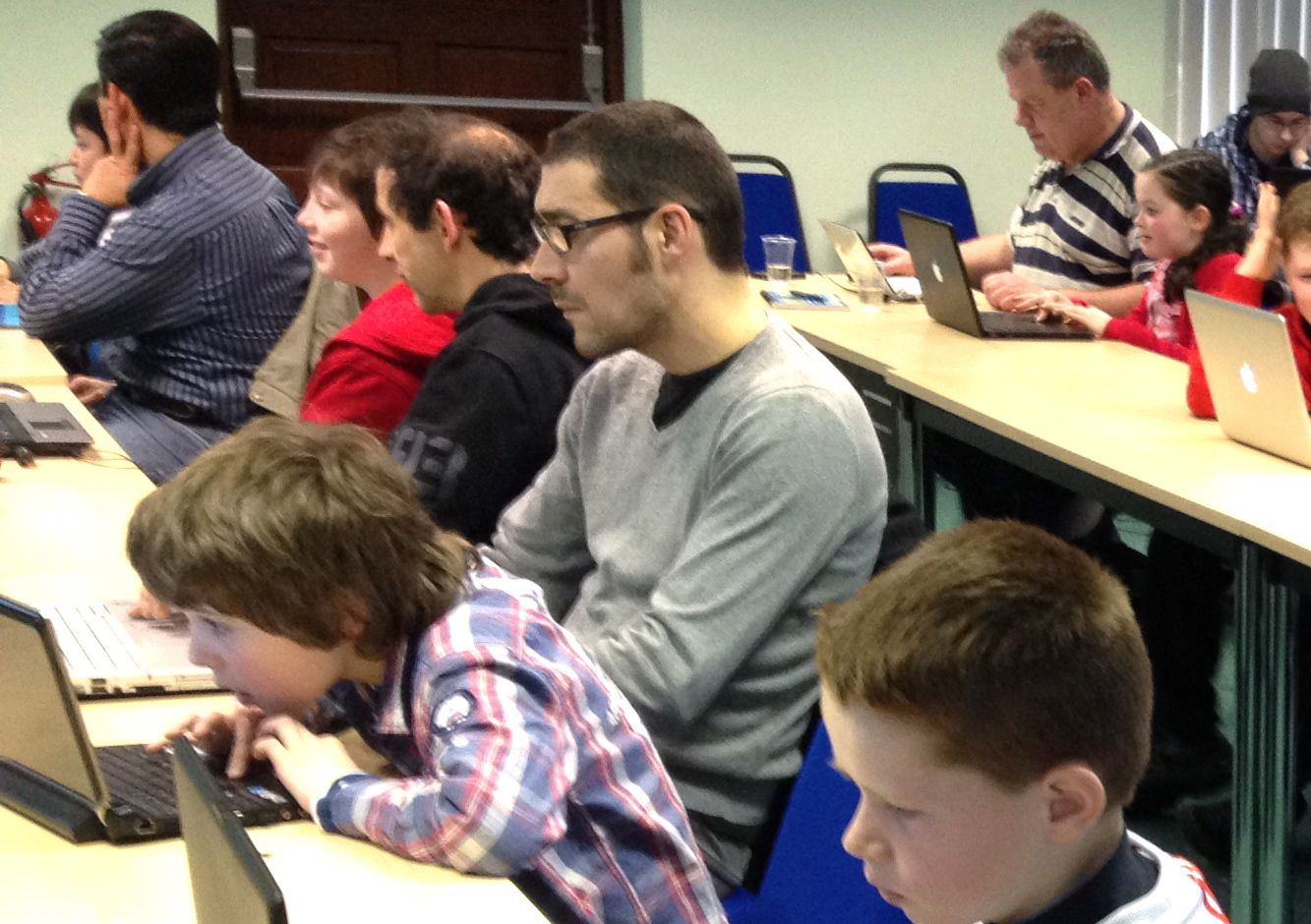
One of the unexpected side benefits of the recently established and highly successful Galway city Coderdojo club, based at DERI and IT in NUI Galway, is the high level of fathers present that are obviously enjoying the quality learning time that they are spending with their children and most noticeably with their sons. There are of course many mothers with their daughters and sons in attendance. But I just can't help but be impressed with the amount of fathers that turn up every Saturday who are actively participating in their sons' education and learning something new in the process, something that I have never noticed before on such a scale outside sporting activities.
Part of the rules of the club is that children younger than 12 must be accompanied by a parent or guardian. Furthermore, we recommend too that these adults should if possible not just sit around passively waiting for the classes to end but actively take part in the course.
The results of this policy have much better than we expected!
Galway City Coderdojo Goes From Strength to Strength
The club has 148 participants that come from as far away as Newport and Ballina in May, has a waiting list of c.30, and has already laid the foundations for two new clubs (Castlebar and Athenry).
Read previous article New Coder Dojo Hackers Club Reflects Galway’s Digital Vibrancy
Part of the rules of the club is that children younger than 12 must be accompanied by a parent or guardian. Furthermore, we recommend too that these adults should if possible not just sit around passively waiting for the classes to end but actively take part in the course.
The results of this policy have much better than we expected!
Galway City Coderdojo Goes From Strength to Strength
The club has 148 participants that come from as far away as Newport and Ballina in May, has a waiting list of c.30, and has already laid the foundations for two new clubs (Castlebar and Athenry).
Read previous article New Coder Dojo Hackers Club Reflects Galway’s Digital Vibrancy
Rare Artifact from the Inventor of the Mouse to go on public display in NUI Galway
A rare specimen of a human-computer interface used by
technology pioneer Douglas Engelbart in his legendary 1968 ‘Mother of all Demos’
presentation will go on public display at the Computer and
Communications Museum of Ireland located at the internationally renowned Digital
Enterprise Research Institute (DERI) of NUI Galway as part of National
Engineers’ Week.
The five finger chorded keyset was
used for the first time by one of the greatest of all modern inventors Douglas
Engelbart at a presentation in the San Francisco Convention Centre on December
9th 1968. It was a seminal moment in modern history as it introduced
many of the key technologies of the Digital Age such as the computer mouse,
video conferencing, word processing and hypertext. The keyset was used in
combination with one of his other new inventions, a three-button mouse, to
allow fast data entry and computer interactions.
The artifact Is on loan to the museum from Karl Flannery of the Galway-based Storm
Technologies who received it from Engelbart in the mid-1980s whilst working in
the USA.
At the time of the ‘Mother of all Demos’ in 1968,
Doug Engelbart was working at the famous Stanford Research Institute located in
Menlo Park California.
The keyset will go on public display at 3pm on
Saturday March 3rd as part of National Engineers Week and will form
the centre piece of a fascinating collection of artefacts that represents
significant milestones in the history of communications technology.
Bell Laboratories of New Jersey, probably the most
influential research facility of modern times, has loaned to the museum for one
more month replicas of the world’s first telephone and first transistor.
The telephone or ‘electrical speech
machine’ was invented by Alexander Graham Bell in 1876.
The ‘transistor’ was
developed in 1947 and became the building block of modern electronic devices. Bell
Labs, owned by the Alcatel-Lucent corporation which is a partner of DERI, can
list amongst its achievements the laser, synchronised sound and motion picture,
the solar cell and the Telstar space satellite.
The museum also has a replica of the original Google
server from 1998 that was constructed by Scoil Bhríde Menlo in conjunction
with Cumann na bhFear in
Ballinfoile. The company’s founders, Larry Page and Sergey Brin, put together a
server consisting of 10 hard disks of 4 gigabytes each, then the largest
capacity drives available, encased in a cabinet covered with children’s Lego
bricks.
This school was selected for this task as Google was
founded in a garage in Menlo Park, California, so named in the 1850s by two Irish immigrants, Oliver and McGlynn, in honour of their Galway birthplace.
The Computer and Communications Museum of Ireland
operates under a multi-sectoral board chaired by Dr. Chris Coughlan of
Hewlett-Packard with representatives from Engineers’ Ireland, NUIG IT, GMIT,
small businesses and Irish Diaspora groups as well as DERI.
Subscribe to:
Posts (Atom)