My Writings (I hope!) reflect my Guiding Principles: -'Enjoy Life to the Utmost but not at other people's expense'-'Think Global, Act Local'-'Variety is the Spice of Life'-'Use Technology & Wisdom to Make the World A Better Place for All God's Creatures'-'Do Not Accept Injustice No Matter Where You Find It'-'Laughter is the Best Medicine'
Google Glasses!
Galway Science & Technology Festival, Part 2: ‘The Future was Yesterday’ at the Computer Museum
The largest crowd ever to visit the Computer & Communications Museum at the University of Galway occurred on the last day of the Galway Science and Technology Festival, and represented an appropriate finale to a 2 week programme with the theme of ‘Then, Today & Tomorrow’.
Under the ‘The Future was Yesterday’ banner, we showcased decades-old equipment & processes that are considered the latest cutting edge technologies such as robots, AI, 3D, Virtual Reality, online learning & gaming.
These included:
-19th century global communications (Morse Code) system in action that represented the birth of the ‘Global Village’
-sensor-based robot (inspired by R2-D2 of Star Wars!) which took part in Galway city’s 1984 St. Patrick’s Day Parade
-1970s AI-based tabletop computer chess set (inspired by a 1969 episode of Star Trek)
-1990s Virtual Reality headset
-1990s Flight Simulator
-1989 Immersive Technology Game glove
-1950s-1970s 3D image devices and 3D magazines
-1982 ‘remote working’ computing device
-1960s children’s Science Fiction device that inspired the mobile telephone
-an exact replica (made by Neal White & Tina O’Connell for the 2013 TULCA Festival of Visual Arts) of the first telecommunication satellite known as Telstar which in 1962 pioneered live global television & which is stilling orbiting the Earth!
Visitors also got to see probably Ireland’s oldest computer (from 1965 & on loan from Michael Jordan); how school-going teenagers in Galway during the early-mid 1980s (before invention of the World Wide Web) used what we now refer to as ‘cloud computing’, ‘online dating’ & ‘social media’; a robot (2016) called Mario that acted as a companion to people with dementia (from Prof Dympna Casey of UoG's School of Nursing & Midwifery).
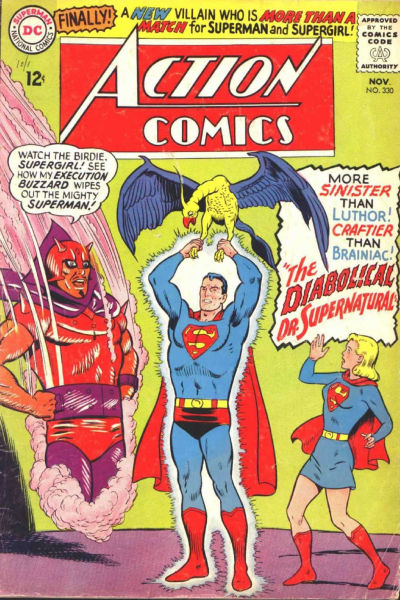
Insight’s Conference Room was transformed into a Reading Room for 1950s/1960s children’s popular Marvel, DC & Eagle comics in which the stories of today & tomorrow were told yesterday (on AI, robotics, benefits & darkside of technology, space travel, oceanic pollution, environmental damage).
There was also on show the latest technology, used as part of the city’s decarbonisation zone, of a multiscreen Dashboard to monitor air quality at multiple locations as part of Galway City Council-led ‘The Air We Share’ project which includes Insight as a partner.
One of the most popular exhibits on the day was a 1970s era public telephone kiosk. Thanks to the technical wizardry of Liam Krewer & Aisling, & using my vintage vinyl record/CD music collection, we set up a ‘Dial-a-Song’ system. It facilitates the user dialing 4 digits between 1955 (birth of rock & roll!) & 2000 on the rotary phone to listen to a particular piece of music from that particular year!
Thanks to the volunteers from the museum board & Insight Research Ireland Centre for Data Analytics who acted as guides on the day.
Next public opening date: Sat Jan 24(11am-2pm)
Shades of Early Science Fiction
What looks like a piece of equipment from a 1930s-1940s science fiction 'Flash Gordon' or 'Buck Rogers' film has taken up residency in the Computer & Communications Museum of Ireland located at the University of Galway and supported by my workplace of the Insight Research Ireland Centre for Data Analytics.
Designed and made by Pat Murphy in 1987 as his final year project for the B.Tech in Education at Thomond College (University of Limerick), it is actually a computer desk housing a Commodore 64 microcomputer, monitor, tape deck and a library of cassettes. The 64 was then one of the world's top selling computers in the business, educational and domestic markets.
But this wooden unit is more than just a computer desk- it is a beautifully crafted structure combining practicality with artistic design which I am sure was inspired by early science fiction.
Pat is still teaching carpentry as part of Construction Studies in a Dublin secondary school.
Photo shows a very happy John Murphy (Pat's brother) standing beside this desk just after he got the computer, tape deck and monitor fully operational.
We thank Pat and John for loaning this exquisite piece of equipment to the museum.
Early Virtual Reality - the 1-Racer Nascar from 1999.
The Fascinating History of Computing and Communications Technologies in Galway
On Tuesday night in the wonderful Portershed, I was guest speaker at the launch of the GIT (Galway IT) group, a gathering of tech enthusiasts who range from veteran developers to young passionate beginners. Thanks to the hard working Liam Krewer for seeing the need for such a club and doing something about it.
My presentation gave an overview of the proud heritage that Galway has in communications and computing from the establishment of the Marconi transatlantic radio station near Clifden in 1907 (the birth of the Global Village), onto the arrival of the world’s second largest computer manufacturing company to Mervue in 1971 (the birth of Ireland’s first ‘digital city’), to the opening of computer stores in 1980, to the establishment in 1983 of an interlinked network of computer labs in the city’s secondary schools (the birth of ‘cloud computing’ and ‘online social media’ in Ireland), and onto the setting of the West of Ireland’s first mobile computer classroom (2008).
For a deep dive into the fascinating history of such technologies, their Galway connections and much more besides, come along to the Computer and Communications Museum of Ireland, that is supported by the Insight Centre for Data Analytics, between 7pm and 9pm on Culture Night (this Friday Sept 22nd). Eircode H91 AEX4
Live on the Ray D'Arcy Show!
I have to say in all sincerity that I was struck by not only the professionalism but also the friendliness, humour and down-to-earth nature of Ray and his assistant Niamh.
Photo shows Ray using a 1980 Sony Walkman and me holding a 1980s Motorola mobile phone (aka the 'Brick') whose inventor Martin Cooper was inspired to create this fantastic hand-held piece of communications technology by the 'Communicator' device ("Beam me up Scotty" says Captain Kirk!) from the 1960s children's science fiction television programme Star Trek. Thankfully as a diehard Trekkie fan since my childhood, I am so happy that this series is still with us!
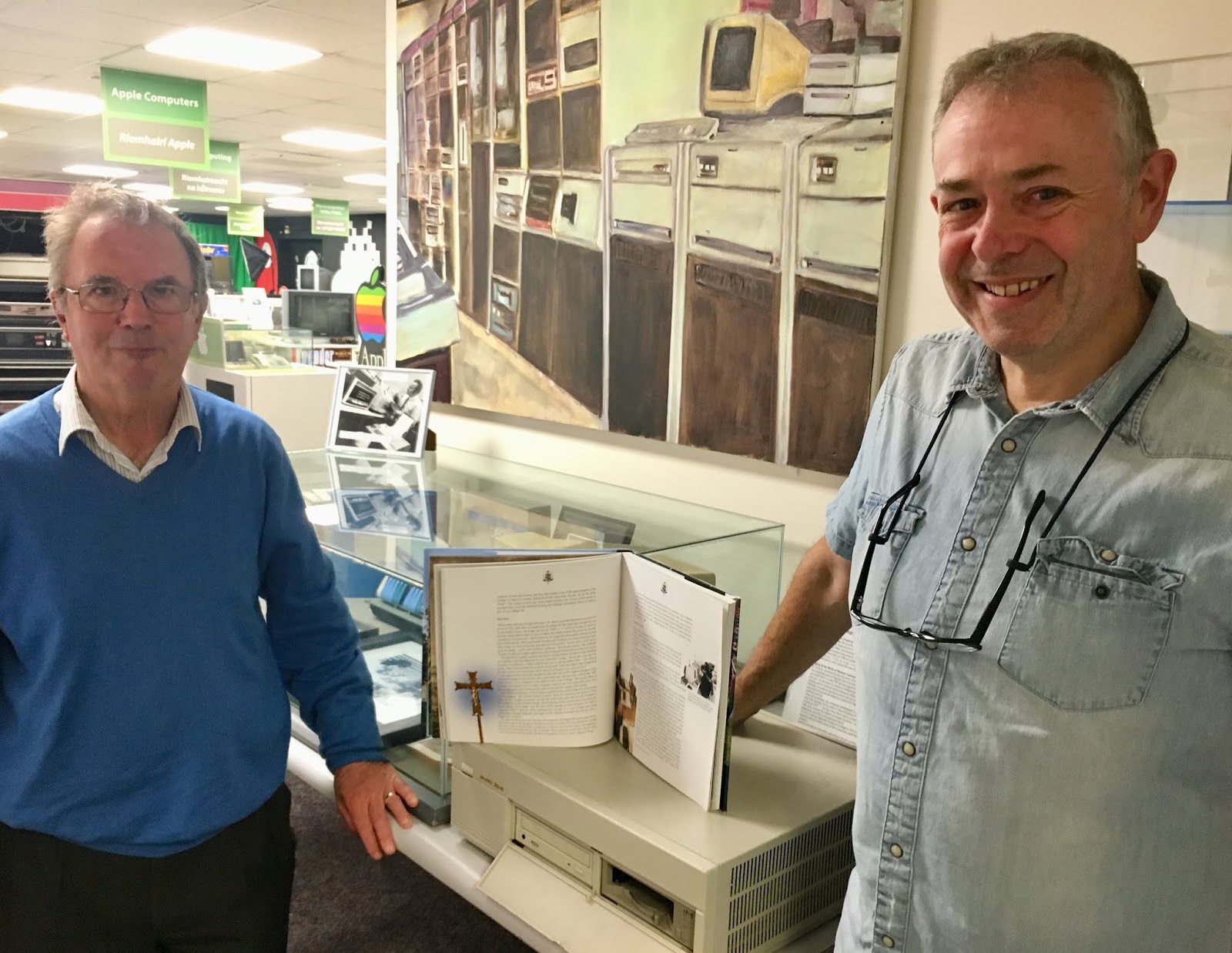
I am glad to report that this great technology heritage facility, that was co-founded by myself and my dearly departed friend Chris Coughlan whom I miss so much, and which has been available for school, university, digital maker, community, heritage and business group visits since 2012, is now open to the general public from 2pm to 4pm every Saturday.
Well worth a visit!
I also enjoyed an interview earlier this week on the same subject with Pat Coyne on Connemara Radio- local community radio at its best.
Supported by the Insight SFI Research Centre for Data Analytics (previously DERI) at the University of Galway since its inception, the museum is now managed by an independent board of wonderful experienced techies under the chairpersonship of Philip Cloherty whose members are Frank McCurry, Liam Ferrie, Pat Moran, Alanna Kelly and Tom Frawley.
‘Back to BASIC’- workshops on the coding language that helped democratise computing 50+ years ago
The workshops will take place at the Data Science Institute subject to COVID-19 restrictions then current. If this cannot happen, we will host online workshops using virtual console simulators and reschedule the ones using the vintage computers to a suitable time in 2021.
Back to the Future - the 1980s revisited
Today so many good-minded tech savvy educators are working really hard to promote computer coding amongst our young people through coding clubs such as Coderdojo and by campaigning to have it accepted as a curriculum subject in schools. We see it as our mission to transform our kids from being passive Computer Users to active Computer Creators. Coding is a skill set that is increasingly beneficial in so many professions and will be even more so as the century rolls by.
But in some ways it can be seen as a ‘Back to the Future’ saga. For during the 1970s up until the mid 1980s, using a computer was synonymous with knowing how to code one. It was a programming language called BASIC that introduced personal computing. In a time when few people ever saw a computer let alone use one, John Kemeny and Thomas Kurtz of Dartmouth College USA designed a language in 1964 that allowed everyday people to have computers carry out many different tasks from writing letters, undertaking research, solving problems and playing games. The language was known as BASIC (Beginner’s All-Purpose Symbolic Instruction Code) and had commands with easy-to-relate to English words that related to their functionality (Print, Goto, If___Then, and later Input). Programming had lost its elitism (for mathematicians only) and could be understood and programmed by ordinary people. But what truly made it accessible to all was the invention of the microprocessor, which formed the basis of the first fully-assembled personal (table top) computers that started to appeared from 1977. The Commodore Pet, RadioShack Tandy TRS-80 and the Apple 11 that were launched that year were off-the-shelf low cost computers aimed at the ordinary consumer and schools. All three came bundled with BASIC. Within a few years the standard version of the language on most computers was Microsoft Basic invented by Bill Allen and Bill Gates.
Schools all over the world started to teach programming. By 1983, most secondary schools in Galway had computer labs populated with computer equipment donated by Ballybrit-based Digital Equipment Corporation(DEC) where students learnt to code. The demise of BASIC and indeed programming in general across educational establishments happened with the rise of application software or what we know call apps from the late 1980s.
Colin donates his favourite Pet to the museum!
Listen to the Radio!
Working late with carpenter extraordinaire Brendan Walsh as we continue to transform the museum into a more 'hands-on' engaged technology heritage facility.
The latest enhancements are to the Radio zone, where the display areas are being improved and an interactive Morse Code learning element is being added.
Work will continue with a small team of trusty volunteers and artist Helen Caird over the next few weeks as we get the museum ready for a plethora of school visits as part of the Galway Science and Technology Festival (Nov 10th - 24th).
Resurrecting 1980s 'cloud computing'!
My friend Chris Coughlan - The Legend and the Legacy.
Thanks Mayor Niall McNelis for making such a wonderful speech and unveiling a plaque at the Computer & Communications Museum NUI Galway in honour of my friend Dr. Chris Coughlan - The Legend and the Legacy., co-founder of this important technology heritage learning facility.
I was honoured on the night to follow the speech of the Mayor by saying a few words of my own on the legend that was Chris Coughlan.
He was truly a giant amongst men and has left a powerful beneficial legacy on so many fronts in Galway that will last for generations to come.
Chris was instrumental in establishing the TULCA Festival of Visual Arts, the Galway Technology Centre, WestBic, the Digital Entreprise Research Centre (DERI) NUI Galway as well as the computer museum that we co-founded along with Liam Ferrie (Celtic Rambler), Pat Moran, Frank McCurry and Tom Frawley. He was a director of Hewlett Packard Enterprise Galway, adjunct Professor of Business at NUI Galway, former President of the Galway Chamber of Commerce, former President of the Chambers of Commerce of Ireland and former chairperson of the Galway Civic Trust.
A man on a mission with a powerful vision of where Galway needed to be, Chris did not take fools gladly and was refreshingly honest, blunt and forthright in his views. He had a generosity of spirit that was unique and he served as an important mentor to so many people from the world of business to that of the arts. Chris also had a deep sense of social responsibility and secured for instance the provision of computer facilities to a number of educational establishments in disadvantaged communities over so many years. He and myself would agree to disagree on a number of political issues but that never got in the way of us seeing a common goal or aspiration that we worked towards for the good of society. Anyway he told me often that he looked on himself sometimes as a bit like me, “a good natured Bolshie” which pleased me no end! We shared a lot of other things in common too including early careers in our youth as managers of small computer stores!
Ar dheis Dé go raibh a hanam.
Pacman's Revenge!
Vintage Typewriter for Galway's Patrick Kavanagh Celebrations
The sixth annual 'Kavanagh Days' takes place in the Salthill Hotel on Saturday July 5th at 7pm. It will pay homage to the "people's poet" in verse, drama, music and song. Tickets are 10Euro and can be purchased on the door.
Check out http://bit.ly/1rtNIPN
The American 'Underwood No. 5' typewriter launched in 1900 was known as "the first truly modern typewriter. Its design became the universal standard for typewriters up until the 1960s. By the early 1920s sales were equal to that of all other typewriters combined.
Ireland’s oldest working computer showcased at Technology Museum in NUI Galway
![]() |
| Joe Hurley switches on a 1971 PDP 11 minicomputer |
![]() |
| Zenith Heathkit computer from ISL (1983) |
![]() |
| Máire
Bean Uí Chonghaile with Pat Moran (Museum Director & ex-DEC) |
Máire was one of the earliest teachers of computing in schools. From 1977, she used a PDP8 minicomputer with two teleprinters provided by DEC Galway to teach Fortran computer language to students at Coláiste Chroí Mhuire An Spidéal .
‘Back to the Future’ Retro Gaming, National Culture Night, Sept 20th (6.30pm-8.30pm)
Relive the thrills of playing video Arcade classics including Pacman, Asteroids, Space Invaders, Pong and Sonic on renowned vintage consoles and computers such as Atari, Amiga, Sega Mega Drive and Sinclair ZX81.
The sights and sounds on offer will try to capture the youthful cultural essence of the early days of computer gaming of the 1970s and 1980 which made such a major contribution in the overall development of digital sound and graphics.
Attendees will also be introduced to the software coding that constitutes the games.
There will also be displays of American and European 1960s science fiction comics and memorabilia including Star Trek, Thunderbirds, Stringray, Avengers, Superman, Green Lantern and Thor.
Times: 6.30pm-8.30pm
Website is www.computermuseumireland.com
A Technology & Science Museum network in Ireland a Possibility?
![]() |
| Curator Toby Joyce with the Telstar replica at the Bells Lab technology museum, Alcatel-Lucent plant, Dublin |
Links have already being established with Bell Laboratories through its parent company Alcatel-Lucent which has a fantastic museum at its plant in Blanchardstown Dublin. Bell Labs, named after its founder the telephone inventor Alexander Graham Bell, is probably the greatest scientific research establishment of all time, responsible for inventions such as the air-to-ground Radio-Relephony, TelePhotograph (fax) receiver, Vitaphone projector (synchronisation of sound with movie), the Transistor and the Telstar.
![]() |
| Air-to-Ground Radiotelephone 1915 display, Alcatel-Lucent, Dublin |
![]() |
| Manual operated Switchboard, Telephone Exchange, Newbliss Monaghan |
Toby is originally from Clifden and worked in DEC Galway during the 1970s and 1980s.
![]() |
| Computer and Communications Museum of Ireland, Galway |
![]() |
| Enjoying Vintage Computer Gaming at the Computer and Communications Museum |
![]() |
| An Taoiseach Enda Kenny listens to Frank McCurry explain the workings of vintage Radio at the Computer and Communications museum |
Click here to access the computer museum website.
![]() |
| Revisiting the micros of the early 1980s |
Hurdy Gurdy (Radio) Museum
There are other wonderful technology heritage facilities across Ireland including at Birr Castle, the location of the world's largest telescope and at the Hurdy Gurdy Radio museum at the Martello Tower in Howth which has a remarkable eclectic collection of 20th century radios and gramophone players.
The Howth building itself has strong associations with the development of telecommunications in Ireland.
For instance, the first telegraph line under the Irish Sea was terminated in the tower in 1852 and Guglielmo Marconi, the inventor of the wireless radio, undertake radio transmission experiments from it in 1913.
Click here to access the Hurdy Gurdy museum website.
Engineering and Astronomy Museum, Birr Castle
The museum at Birr Castle county Offaly is dedicated to the scientific discoveries and innovations of the Earls and Countesses of Rosse of the 19th century who were responsible for their place of residency being an internationally acclaimed hub for science and technology. The science facility housed in the renovated stables explores the wonders of Victorian photography, engineering and astronomy with a special emphasis on the brilliant design of the world famous Great Telescope.
Built in the 1840s, it was for over 70 years the largest telescope in the world. Its builder the third Earl of Rosse used it to discover the spiral nature of some of the galaxies. Today, its promoters claim it is probably the largest historic scientific instrument in operation today.
Click here for access to the Birr Castle website
Honouring Technology pioneer Douglas Engelbart, RIP
The Computer and Communications Museum of Ireland, based at the Digital Enterprise Reseracgh Instiute (DERI) in NUI Galway is very privileged to have in its possession a rare specimen of one of his inventions which we will proudly display at a public Open Day in his honour that will take place this Saturday (July 13th) from 10am until 3pm.
The 'five finger chorded keyset' was publicly used for the first time by Douglas in his legendary ‘Mother of all Demos’ presentation that took place in the San Francisco Convention Centre on December 9th 1968.
This event, attended by c.1,000 computer experts, was a seminal moment in modern history as it introduced many of the key technologies of the Digital Age such as the computer mouse, video conferencing, word processing and hypertext.
The keyset was used in combination with one of his other new inventions, a three-button mouse, to allow fast data entry and computer interactions.
At the time of the ‘Mother of all Demos’ in 1968, Doug Engelbart was working at the famous Stanford Research Institute located in Menlo Park California.
Douglas met Dr. John Breslin of DERI and NUI Galway in the United States earlier this year and mentioned that he was delighted that the Computer & Communications Museum of Ireland held an example of his work in it's permanent collection.
The artifact is on loan to the museum from Karl Flannery of the Galway-based Storm Technology who received it from Engelbart in the mid-1980s whilst working in the USA on behalf of Digital Equiipment Corporation (DEC).