Showing posts with label education. Show all posts

The Long Goodbye Part 2: The Last of my Species!


A few weeks ago my 22 year involvement with university science research centres ended.
With a vision of "Empowering Citizens & creating Smarter Societies", the multi-university Insight Centre for Data Analytics-which helped secure for Ireland a reputation for data-driven research & innovation in fields such as connected health, sensor technology, environmental analytics & human computer interaction-completed its funded research programme. Insight & ADAPT Centre have now become 'Rinn AI', Ireland’s national centre for data & AI research.
So as Insight’s tenure ended, I felt that it was an opportune time for me to do likewise, to retire from my role as a university research centre Educational & Public Engagement(EPE) Manager & to move onto pastures new.
In summer 2004, I attended the first meeting of what were then referred to as ‘Outreach’ Officers of the recently established research centres operating under Science Foundation Ireland(SFI). Of those that were at that inaugural gathering in Dublin, I’ve been for many years the only one still doing the same job
At one level, I could be viewed as the last of my species! 😁
Though it was a voluntary decision to leave, nevertheless it was not an easy one. For I leave behind good friends & colleagues at a world class science research centre and at the University of Galway who helped me in delivering educational programmes to schools, communities & businesses across Ireland
And I’ll deeply miss the fantastic teachers, children & youth that I have been involved with through my Educational and Public Engagement (EPE) work at Insight & its predecessor the Digital Enterprise Research Institute(DERI) of University of Galway
I am immensely proud that we helped pioneer learning initiatives which have brought benefits to so many:
in co-creating Citizen Science & Engaged Research projects, hosting the Computer & Communications Museum, establishing DSI’s Virtual Reality Lab, providing a travelling laptop (mobile IT) lab for schools, & Digital Makers training/facilities particularly in hosting Coderdojo classes for 10 years, mentoring Internet Safety sessions for all ages, being part of the introduction of art into Science, Technology, Engineering and Maths (STEM becomes STEAM), setting up Computer Rooms in IPAS centres across the west of Ireland, training teachers to create their first ever school websites, facilitating rural communities in digitising stories/photos from long ago, upgrading with the Access Centre older laptops to be used by families in social need, assisting the annual Galway Science & Technology Festival in its annual STEM schedule, and helping to pioneer the introduction of STEM programmes to disadvantaged communities (asylum seekers, Travellers, older peoples).
So what next for me?
I will certainly not have time to get bored!
There will be travels with my wife Cepta to places far and near and spending time with my son Shane's new family.
I will be honouring committments to a number of schools and organisations in online local heritage (Irish BEO) and coding projects, and as its curator and co-founder I intend to help make the Computer and Communications Museum of Ireland - CCMI become an important national educational and technology heritage resource.
But in an era when climate denial is on the rise across the globe and governments are rolling back on their commitments, I will have a big focus on working with others to tackle the ever growing & interlinked Climate & Biodiversity Crises through the Galway National Park, Connemara Greenway Alliance, Corrib Bridge & Terryland Forest Park projects.
And finally I can begin to write the long overdue book about life in Galway during my student days(which I promise will be a fascinating read!)

61 schools & youth events organised in January-March 2026!


Ever since our return from the Christmas holidays, it has been 'all systems go!' at the Insight Research Ireland Centre for Data Analytics as we continue to deliver a range of exciting & meaningful educational programmes both directly in schools & for those visiting the Data Science Institute (DSI) of the University of Galway.
Whilst our engaged research projects involve partnerships with businesses, local government, state agencies, health professionals, farmers & communities not only in Ireland but all across Europe, we have always since our inception given significant attention to our Irish school-going population not only in upskilling them in technology skills that fit within the educational curriculum; in providing role models in the form of young researchers; in making them aware of career opportunities over our multiple research fields which align with the United Nations’ 17 Sustainable Development Goals (SDGs); but also in making them as well as their teachers & parents fully aware of & how to counter the dark side of the Web especially now in an era of growing abuse of AI by major players.
Our educational activities range from coding, Virtual Reality & digital local heritage workshops, to Research Talks on AI & Data Science, to guided tours of the Computer and Communication Museum of Ireland and in providing age-appropriate presentations on Internet Safety.
From early Jan to end of March, we will have organised 61 events for schools, youth groups, after-school clubs & university societies (e.g. in Engineering, Computing & Innovation) in counties Roscommon, Mayo, Offaly, Galway as well as in Galway city. I myself also got the opportunity to travel overseas in my EPE role- this month and last I mentored in the island school of Inishbofin! Furthermore, we make certain that we deliver programmes to ‘Delivering Equality of Opportunity in Schools’(DEIS) that have high concentrations of disadvantage.

Thanks to Insight Galway volunteers, we've ensured that our Educational & Public Engagement(EPEs) programmes are as strong in 2026 as they were in proceeding years, So a big thank you/Bualadh Bos to our researchers Abdul Wahid, Al Waskow, Alan Reidy,Alex Acquier, Carlos Tighe, Duc-Duy Nguyen, Ifeoluwapo Aribilola, Jefkine Kafunah, Katarzyna Stasiewicz, Gaurav Negi,Kashif Shaheed, Lucas Rabelo, Liz Hurley, Luke Porwol, Shakir Bilal, Janak Kapuriya, Jim Duggan,Jefkine Kafunah, John Andrew, Umair ul Hassan, Muhammad Sohaib Ayub, Muhammad Yasar Khan (PhD), Prateek Paul,Ronan Timon, Tunde Ajayi as well as to our great operations team of Brian Wall, Christiane Leahy-Coen, claire browne, Gerard Conneely, (PhD), Maria Smyth, Michelle Treacy & Tomas Grigas, PhD, PSM I
As always, I consider myself blessed to work alongside such colleagues who are prepared to give their time & energies to introduce their research to the wider community as well as in upskilling our youth in creative technologies

2004-2023: My son Dáire's 19 year journey in Education.


In September 2004, a happy and excited four old boy started his first day in primary school (photo on left).

Dáire's eight years at Scoil San Phroinsias (Tirellan) was followed by six years at Coláiste Iognáid (the Jes), four years at the NUIG/University of Galway and finally one year at the University of Barcelona where he completed this summer an MSc in Medical Science.
All of these educational institutions served him well and he learned a lot from some fine motivational teachers and lecturers.
His life-long love of wildlife especially marine life, inspired by his fascination with and volunteering at Galway Atlantaquaria with its great staff and management (thanks Liam Twoney, Noirin, Neil, Pete, Colette & Kevin), meant I thought for a long time that he would pursue a career in marine biology or veterinary science.
But that was not to be and his journey in education will mean he will be helping in some form to save the lives of people rather than animals. 
So well done Dáire! In an era of destructive wars and a climate crisis, it is so important that our youth take the decision to help their fellow humans and the rest of nature, both professionally and as volunteers.
The photo on the left shows Dáire on his first day to school accompanied by his older brother Shane (who started secondary school in St. Mary's College on the same day!) and his mom Cepta (p.s. I was there too- I was the photographer!). The image on the right shows Dáire in his graduation robes with Cepta this summer in Barcelona, standing in front of the one of the great man-made wonders of the world, namely the Basílica de la Sagrada Família ('Holy Family').
It is appropriate that both photos show Dáire with his mom. For Cepta has been his (& indeed that of our other son Shane) rock throughout his life, always there to help and guide him from birth to adulthood. So I extend a big 'bualadh bos' to my lovely wife Cepta!
Hopefully too the designer of the awesome Sagrada Família, the renowned Catalan architect Antoni Gaudí, will also serve as a positive influence for Dáire into the future. For his passions were so benign and are now needed more than ever in today's troubled world, namely a deep love of Nature, a need to 'green' the built environment, a practitioner of innovation, a Christian humanitarian and a proponent of indigenous culture (in his case the language, art, and history of Catalonia).

Graduation Day- The End of an Era for our son, for his university and for his parents


Cepta and myself were very proud parents when we stood beside our youngest son Dáire a few days ago as he graduated from his university.
 
He was one of the final class of students to graduate from the National University of Ireland Galway (NUI Galway). From yesterday it will be known as the University of Galway/Ollscoil na Gaillimhe.
 
His graduation represents the end of an era for Dáire as he leaves Ireland in a few weeks to commence a postgraduate degree in bio medicine (human biology) in Barcelona. Like his older brother, he has been a gift from heaven to Cepta and myself over the last twenty two years. A cycling, field sports and travel enthusiast; a keep-fit advocate; a lover of aquatic life (thanks to Galway Atlantaquaria); a conscientious student; a kind person who surrounded himself at university by a group of very loyal good friends whom he has known from his early days in Coláiste Iognáid. We earnestly hope and pray that he will soon enter a new and exciting phase of his life by starting a long and successful career in hands-on bio science, a sector that will allow him to work with others to use new technologies to improve the health of people everywhere. 
 
It seems like only yesterday that Dáire was starting his first day in primary school (Scoil San Phroinsias). It was the same month that our oldest son Shane finished up in the same school to start his secondary education at St. Mary’s College. But it was 2004. How time flies!
 
For Cepta and myself his graduation brings to an end our involvement as parents in Irish education which began 26 years ago. 
 
So the day was one of great happiness but also tinged with a little sadness and a few tears.
 
I could not let the day pass though without taking a photo of Dáire sitting one last time in a Galway university lecture hall (and one in which I also sat as a student fadó fadó!); a photo of him using his student card to enter the campus library one final time and a photo of him joyously throwing into the air his graduation hat in the oldest part of our esteemed campus which dates back to the 1840s. Appropriately it was in the same decade that our university first opened as Queens Collage Galway that my maternal great grandfather Thomas Agnew became the only member of his family to survive the Irish Famine (An Gorta Mór). The rest of his brothers, sisters and parents it seems died from starvation and execution. He alone survived. As with many other Irish families, hunger, eviction and imprisonment at the hands of absentee landlords, the British judiciary and military is part of our history. But that is a tale for another day. Suffice to say that Dáire’s graduation is in my mind a thank you and a tribute to so many of our ancestors who experienced so much pain, death and destruction so that future generations of Irish men and women of all creeds and none could have a better life, one based on dignity, respect, justice and hope.
Finally I have to compliment Dáire for celebrating his graduation by taking part in a 80km charity cycle to the Electric Picnic.

The Kids Know What is Best for Our City! Let's Listen & Learn from them!


The benefits of a partnership and inclusive approach towards developing a future Galway city that is sustainable and integrates nature into its infrastructure was shown yesterday when children from 13 city primary schools took part in Glór na Óganach ('The Voice of Youth') organised by the Galway National Park City (GNPC) initiative supported by the Galway Education Centre. It was an online event chaired wonderfully by Fionnghuala Geraghty, a teacher of Scoil Chaitríona Senior, where pre-teen students gave their opinions by way of talks, pre-event surveys and classroom discussions about what they want in a post-COVID Galway. This event was unprecedented and amply shows the important need and role of a multi-sectoral movement such as the Galway National Park City initiative.

We often talk about what children want but very seldom give them the opportunity to voice their own opinions on how they wish society to develop.
But their answers and comments yesterday were breathtakingly fresh, honest and full of common-sense. They displayed an awareness of the benefits of looking after nature in the city and having increased areas for biodiversity, in planting more trees and having more wildlife; in the need for information noticeboards in areas of nature; in the need to lessen screen time and to play outdoors in clean, safe green spaces and in playgrounds with flowers, more hands-on play equipment and having both walls and trees that they could climb; in the attractions of having lots of classes outside; in having safe walking and cycling routes to school and in/around the school, in banning once-off plastics and in increasing the possibilities of enjoying the local waterways.
Interestingly the overwhelming majority of these boys and girls felt that it was the woods, the seashore and the wildlife that they most liked about Galway city.
They were also fully aware of the dangers of biodiversity loss and of climate change.
So it was heartening to know that our youngest generation have strong feelings of what is most beautiful about our city, are expressing deep concerns about what is wrong with it and know what needs to be done to make it better for both people and wildlife.
So the challenge is for the adults to listen and to learn from the children in order to ensure that we hand them over a ‘liveable’ planet.
We will publish a summary of proceedings over the next few weeks.
Glór na Óganach was the first gathering of pre-teens on the subject of a future city. But not the last. There will be a follow-up in November as part of the Galway Science and Technology Festival and a third will take place in Spring/Summer 2022. A similar thematic gathering of teenagers from second level schools will hopefully be hosted in the festival also. Yesterday’s was the first such event and we will all learn from the experience, improving on it and looking at the possibility of hosting a children’s forum tríd Gaelige and a forum for infants, 1st and 2nd classes.
Finally I extend a big 'Bualadh Bos' (round of applause) to Fionnghuala Geraghty for her awesome work in preparing the teacher/student surveys and in chairing the event, to the Galway Education Centre for its support and of course to the teachers from the 13 schools who made it all possible in the final week of the school year when they are exceptionally busy. We really enjoyed working with ye all. Go raibh míle maith agaibh!

Graduation Day in a Little School on a Hill in Connemara


A few days ago, I completed my official involvement with St. Theresa's National School, Cashel, Connemara. In my capacity as chair of the board of management (to Dec 1 2019), I gave a speech of thanks and best wishes to the graduation class of 2020 at their online (Zoom) conferring.

With only a few dozen pupils in this fine learning establishment. Andrew and Arnold were the entire graduation class of 2020. But if it is a small school, it is one with a very big heart as wide as the Atlantic Ocean whose waters almost lap against its gates.
As with many little rural schools across Ireland, it is the heart beat of the local community giving meaning, purpose and identify to its people.
Thanks to the force of nature that is its principal Cepta Stephens, the graduation celebration of last Tuesday, though taking place online in the strange surreal environment that is COVID 19, was the living embodiment of all that is good and beautiful in our people and in our countryside.
All the children and parents of the school took part in the ceremony. There were excellent live music performances and literary renditions from many of the children; the showing of thematic videos; a presentation in story and in imagery of the history of the two graduates during their school days, from infant to senior class; tributes from the parish priest, music mentor, parents' representative, board of management, and from all of their fellow classroom pupils (3rd, 4th & 5th classes). Uachtarán na hÉireann/President Michael D. Higgins even ‘turned up’, starring in a short film that he made for the benefit of all the primary school graduates of 2020 (It surprised and impressed Andrew and Arnold as I am sure that it did for all graduates). The two hour ceremony was so enchanting, so emotional, so friendly.
I am a big fan of all the schools of Ireland. But I have a special affinity for the small rural school which, in a world of impersonalised fast-moving globalisation, is in many cases the key custodian and embodiment of local identity. When such an institution is forced to close its doors, then a sense of community can soon disappear.
The principals in these little country schools have one of the toughest 24/7 (but most rewarding) jobs in the country- having to be teacher, administrator, parents’ liaison, sports manager, musician, friend, doctor...the list is endless!
In mid 2016, Cepta asked me to consider becoming chairperson of this school located in the heart of southern Connemara. Having long being an admirer of her visionary principalship and holistic teaching, it did not take me long to say ‘yes’.
But my involvement goes back to 2005. Over the years, I have mentored heritage, medical, scientific, Internet Safety and coding programmes in the senior of the two classrooms. I hope that this continues on into the distant future as I see a school that provides top class education to its pupils and one is strongly supported by the local community.
Finally as I said in previous postings written during the Great Lockdown, I also see a bright future for all of rural Ireland if green, smart and community-centric sustainable policies are implemented.

Life in the Al Zaatari Syrian Refugee Camp

Below is an article that I wrote for the Galway Advertiser earlier this week.
In ten days time I am returning to Jordan to work teaching coding to teachers in local schools and in Syrian refugee camps.

The biggest humanitarian crisis since the aftermath of World War Two has led to an exodus of 5 million peoples from Syria since 2012.
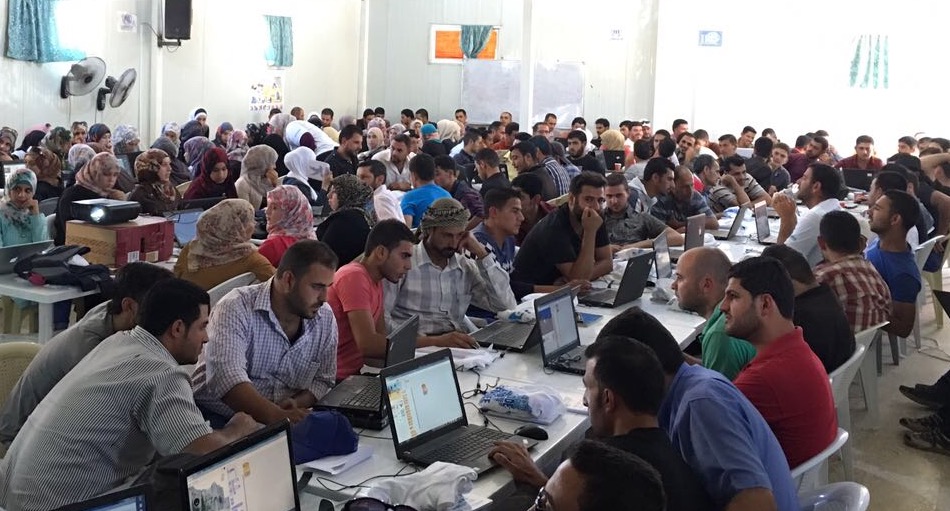
In an effort to help refugees living within the Middle East, a small number of individuals from Galway in February 2016 became part of an ambitious digital learning programme designed to bring computer coding skills to thousands of children, teenagers and teachers living in camps and districts across the region. Known as Refugee Code Week (RCW) the initiative, led by the German software corporation SAP in partnership with the United Nations RefugeeAgency(UNHCR) and the Galway Education Centre, has developed course content and provided teams of IT volunteers from across three continents to upskill teachers from Syria and other Middle Eastern countries in delivering coding programmes to young refugees and the youth of host nations from eight years to twenty years of age.


The Galway volunteers taking part in the programme are Bernard Kirk , director of the Galway Education Centre and co-founder of RCW, Nuala Allen (SAP in Parkmore), Niall McCormick (Colmac Robotics) and Brendan Smith (NUI Galway).

Brendan Smith, who has through his Outreach projects at the university since 2004 worked with asylum seekers in Ireland, was seconded from the Insight Centre for Data Analytics at NUI Galway to become a master instructor in RCW as well as in a sister programme, namely the highly successful Africa Code Week that has been operating since June 2015.

Here is his story.


The Middle East has experienced unimaginable devastation since the 2003 invasion of Iraq. As in all wars, civilians are the innocent victims.  In what was once one of the most modern countries in the region, it is estimated that 470,000 inhabitants have died since 2011, over 7.6 millions are internally displaced within Syria and over five million were forced to leave. Whilst approximately one million are in Europe, most are living in the neighbouring countries of Jordan, Lebanon and Turkey. In spite of the severe strain on their societies and economies, these host nations have responded with amazing generosity and friendship.  Lebanon has 1.2 million Syrians (in a total population of only 5.8 million that also includes 450,000 Palestinian refugees), Turkey has 2.7million and Jordan approximately 650,000.  Many refugees have lost family, friends, neighbours, homes and jobs. Scarred by their experiences of brutality and living in poverty often in enclosed camps in a foreign country, education and careers can become impossible luxuries as they spend their days struggling to survive.

There is a genuine fear that a whole generation of young Syrians will be absent from regular schooling. 

So it is essential that they are provided with the learning skills and knowledge that can offer them some genuine hope for a better future.  Refugee Code Week is part of that vision and commitment, with qualified trainers providing computer coding training to refugees in Turkey, Egypt, Lebanon and Jordan.
 I have worked in all four countries. But it was my time in the latter that introduced me at first hand to the sheer scale of this modern man-made disaster.
On my first trip on a small mini-bus packed with volunteers that left the Jordanian capital of Amman for the Al-Zaatari refugee camp located only a few kilometres from the Syrian border, I really was not sure what to expect. 
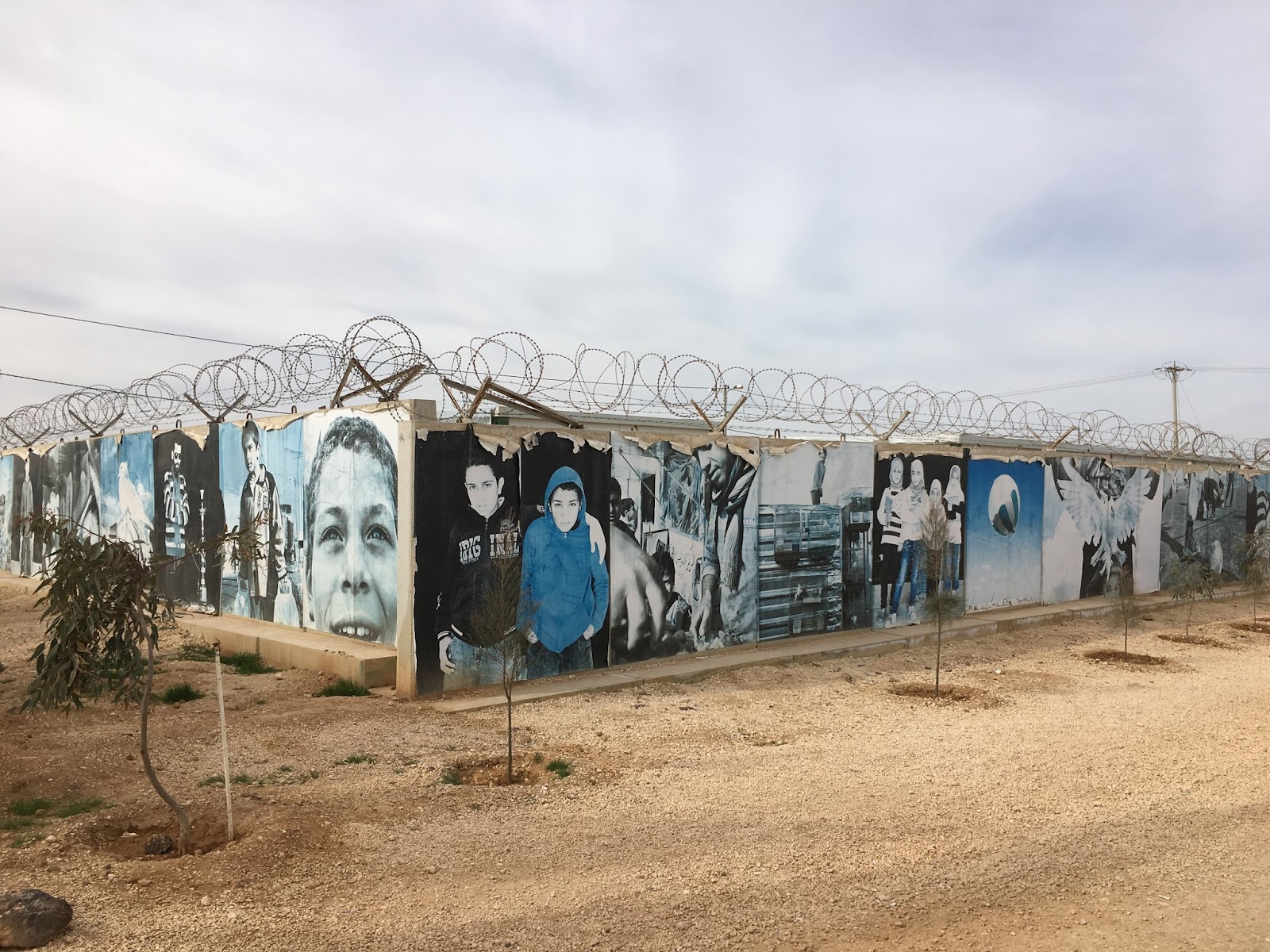
 Our destination represents the second largest refugee camp in the world. Surrounded by a deep trench, armed vehicles, military personnel, high fencing, barbed wire, with the sound of warplanes overhead, a huge mass of thousands of single-story prefabricatd wooden portacabins populated by over 80,000 confined inhabitants stretched before us.
It seemed to me then that we volunteers were but tiny pathetic dots on a human landscape where our high lofty aspirations would soon be dashed against the reality of everyday lives in an inhuman environment that was beyond our understanding.

But appearances can be deceptive. When it was hastily established in 2012, Al Zaatari was a sprawling tent encampment in a barren desert devoid of facilities, rife with corruption and violence. Most of the refugees that fled to Jordan did so to escape almost certain death or persecution in the Syrian city and countryside of Daraa which was where the uprising against the Assad regime began in March 2011. 
 But the Jordanian government, UNHCR, NGOs and donor countries working with the Syrian residents have together transformed Al Zaatari into a fully functioning city. Drill holes tapped into deep underground reservoirs provide water by way of a fleet of trucks and local storage tanks to the camp’s 14,000 families. It is expected that piped water will be installed in all homes later this year.  As well as nine schools, three hospitals, two supermarkets, and a number of sports fields, one of the most striking physical features of the camp is the large shopping street known by the camp residents as the ‘Champ Élysées’ that is populated with a myriad of Syrian boutiques, butchers, bakeries, food stalls, cafes and bike repair shops.  
The main mode of transport is the bicycle, thousands of which were donated by the Dutch government, from it seems those that they found abandoned outside railway stations across the Netherlands. 


Beautiful hand-painted murals emblazon the exterior walls of hundreds of huts extolling the message of hope, or showcasing the beautiful natural Syrian countryside that residents left behind and hope someday to return too.  But the main theme of the wall art painted by local artists is Education and the benefits that this promises.  


This belief is critical as there are serious problems for the youth of the camp.

Each family is provided with a quota of daily bread and a small monthly allowance.  But to pay for extra food and essentials a high percentage of residents work either with the UNHCR or often illegally outside the camp. Many of these illegal workers are children who can be exploited and abused.  30% of the camp’s residents are of school-going age. But 25-30% do not regularly attend any of Al Zaatari’s nine schools because they work. Hence our role in introducing computer coding into the camp’s schools and in promoting the economic benefits that this should entail for child refugees is something that we believe strongly in.


The students teachers that we taught came from many different career backgrounds but all were warm, gracious, creative men, women and children that had an appetite to learn, to overcome the circumstances that had befallen them and to teach the new language of coding to the children of Al Zaatari. 


We also provided a Syrian female organisation in the camp known as the Tigers who organise social and educational projects for girls with programmable robot kits. Because of the circumstances that they find themselves in, being confined within a small geographical space, there was no doubt that many of the camp’s female teenagers were getting married younger than would been the case previously when they probably would have had the opportunity to continue on into further education.


The UNHCR personnel such as Abdul Qader Almasri welcomed us with open arms and provided laptops, rooms and translators.

There were some cultural differences though to get used too. Whilst it was okay for me to shake hands with my male students, this was not the case with regard to females.  Instead I would place my hand above my heart and gently smile when we were being introduced or when leaving. Though most young women I taught wore the veil known as the Hijab, some wore the Nijab which covers all of the face except for the eyes. As a teacher from Ireland, this took a little getting used to!


But a sobering thought for me of my time in Al Zaatari and elsewhere in the Middle East was that many of the friendly kind-hearted Syrian people that I taught, met and now consider my friends would have been tortured, enslaved, conscripted into armed groups or killed had they stayed in their country.


Note: I will be organising an exhibition of murals and paintings by Syrian artists from Al Za’atari in  Galway later this year.

Christmas in Galway: The School Concert


One of the highlights for many people in rural communities and urban neighbourhoods across Ireland is the hosting of the annual Christmas concert in the local school.
It is when the children become the stars of their locality as they sing, dance, do comedy and tell stories to an audience comprising their parents, grandparents, cousins, friends and neighbours. 

Due to globalisation, mechanisation of farming, a drop off in regular attendance at traditional Irish places of worships and the ongoing population drift to the big cities, the local school is the only glue that binds many rural communities together. These learning institutions are the living active embodiment and repository of all the knowledge, experiences, ballads, poems, literature, arts, culture and history of a local community. If they close the lifeblood and heritage of a locality going back generations can be lost for ever.
The small country and neighbourhood school provides all too rare opportunities for local people to come together and to be involved in their local area.
The Christmas concert is a great example of collective community volunteerism in action. Usually a small army of parents support the teachers by preparing/serving food, selling tickets, securing spot prizes and constructing stage props.
But it is the teachers that are the unsung heroes of such events as weeks of rehearsals with their pupils teaching them to act, to play musical instruments and to sing finally pays off.
I attended the Christmas concert this year in St Theresa's National School in Cashel Connemara where I watched the children perform in the Nativity play and in lots more beside. So well done to the principal Cepta Stephens the teachers, the parents and particularly the boys and girls for a most enjoyable experience.

Cyberbullying, Internet Safety & Female Objectification.


Over the last few weeks I have spent considerable time visiting primary, post primary and special needs schools talking to children, youth, teachers and parents in counties Clare and Galway on Cyberbullying and Internet Safety.
My work coincided with the lead-up to Mental Health Week.
Thankfully I have so far got very good feedback from the schools that I have visited (see comments below).

Due to a growing disconnect with Nature, too much time spent indoors, an over-reliance on smart devices, peer pressure to conform, body image, exam pressures, stress, lack of job security, isolation, easy access to drugs and cheap alcohol, 20% of our young people in Ireland are suffering from mental health issues. in 2013, circa 7,000 young people harmed themselves.
I always promote the importance of fostering a sense of community, of place, of self-esteem and of belonging; and that we have to look out for each other. In an increasingly disconnected urban sprawl environment, we need to bring the interdependence 'Meitheal' spirit of old rural Ireland into the 21st century city.
Most crucial is that we should always talk to some one we trust if we are experiencing pain including that of being bullied. Never keep a problem to oneself. We should come to each other's aid rather than ignore the humiliation of some one else out of fear of being picked on.

Whilst all ages and sexes are suffering, it is teenagers and particularly teenage girls that are increasingly becoming victims of abuse and harassment. In Iraq and elsewhere, ISIS and similar extremists are forcing captive women into sex slavery. In the West, young women are being disproportionately targetted on the Internet and forced to endure crass sexual comments and threats. Much more so than men, it is women that have been the prime victims of the World Wide Web since its early years. Teenage girls are the biggest prisoners of online porn.

In the 1990s the first well-known victim of the Web was Monica Lewinsky, who had an affair with President Bill Clinton. Whilst he was lauded by many as a 'boyo', Monica was publicly lambasted as a slut, a slag, a bitch, a whore...


Little has changed if we view the 'laddish' behaviour of American presidential candidate Donald Trump.
But it is up to all of us to tackle misogyny in all its forms, racism, sectarianism and give comfort to those that are humiliated. Stand up for each other.


Feedback from schools:

-->
Silvia Griffin Lakeview School

"I really want to thank you for an excellent presentation yesterday evening to the parents association, they found it very informative. As I said I enjoyed your style, a mixture of technology  and humanistic  approach to your professional life.... Parents have already expressed huge  interest, in attending your  workshop...".

Glenamaddy Community College, 3rd year students
--> "I found this talk really interesting and I'm now aware of it (cyber bullying) in my life."

"I thought the talk was good in that everything was included to know about cyber bullying. It was sad near the end but it was valuable information that we can use for life."

"It was very helpful and I learned a lot from it. It was very interesting."

"I found the talk very interesting. I learned a lot from this talk and not to ever bully anyone."  

Senior cycle student, county Galway
"I really enjoyed your presentation today as it was the first time I had seen an adult discuss with teens the (sometimes violent) sexualization of teenage girls on the internet and in the porn industry. You were non-judgmental, and made sure to highlight the long term effects on the victims, without any victim-blaming. I think that it is a very important subject to talk about with young people and you handled it brilliantly..."


Internet Safety for Children - A Parent's Guide
For a more comprehensive overview of the dangers and challenges of the Web and how to put in safeguards particularly in relation to protecting children online, I would recommend you to check out the excellent article written by Peter McBryde entitled Internet Safety for Kids - A Parent;s Guide 

-->

Working with An Garda Síochána on Internet Safety


Over the last few years, I have spent a lot of time co-presenting workshops/talks with An Garda Síochána on Cyberbullying & Internet Safety to pupils, students, parents and teachers in primary and post-primary schools.
Having the Garda present at these events has reinforced the importance of this issue to the participants. Their understandable knowledge of the relevant legislation, their status as officers of the law and their first-hand experience of both victims and perpetrators of cyberbullying has proved invaluable in highlighting this growing problem within modern society particularly amongst young people. 

Over the last few weeks, I have visited second level schools such as Galway Community College and Colaiste Bháile Chláir with Garda Marcus and Alan who are two of the most conscientious public servants that I have ever meet. They personify all of the positive societal attitudes that police enforcement agencies are meant to represent, namely to protect the vulnerable and to promote the common good.

The Sea Change Challenge- Increasing Public Awareness of the Health of Oceanss

The Sea Change game and digital story challenge is open to Galway city/county (Ireland) and Lund (Sweden) CoderDojo members aged 7-18yrs. The challenge is being organised by NUI Galway as part of their contribution to a European project entitled “Sea Change” which aims to establish a fundamental “Sea Change” in the way European citizens view their relationship with the sea.  The challenge is to use the fun and popularity of designing and playing tech games as well as enjoying digital stories to raise awareness of Marine issues like the need to protect cold-water coral reefs, how we can begin to address the scourge of micro-plastics, and how we can maintain healthy oceans and seas, for ourselves, for the animals that live in them, and ultimately for the planet.


Entrants from individuals or teams up to a maximum of four members are invited to submit projects on the theme of Sea Change. The submissions will be reviewed by a panel of experts and judged on ‘best concept’ and ‘ease of use’.  The winning project will be included in an iBook about cold water corals that will be presented as a teaching resource to secondary schools. There will be two awards presented in each country to the finalists: Junior Award: €300 and Senior Award: €500*


At the recent Galway launch, Dr. Anthony Grehan from NUI Galway gave a presentation on his team's research into cold-water corals; Dr. Amy Lucher outlined her studies on the alarming high levels of plastic litter found in our oceans, and Gavin Duffy gave an insight into his company's 3D modelling of Galway Bay and the waters of Cork in order to provide ideas for game development. 
Other resources are available (newsletters, poster, fact sheet, ocean literacy booklet, videos) on the project website: www.seachangeproject.eu.

Competition Timeline

Registration by: 9 April, 2016

Submission by: 21 May, 2016

Winners announced: 11 June, 2016
For further information, contact Brendan at coderdojogalwaycity@gmail.com

Galway is ‘Youth Coding Capital’ of Europe

Coderdojo session, NUI Galway

An information and registration event for both young people and parents interested in having their children learn computer coding will take place from 2pm-3pm in the Insight Centre for Data Analytics in the Dangan Business Park, NUI Galway.


Coderdojo session, NUI Galway
The event will introduce attendees to the programming and electronics courses being provided in a relaxed social environment from mid October by Coderdojo, Ireland’s fastest growing youth movement. Sessions will be held in the IT Building and at Insight in the university. At a dojo (Japanese term for training centre), young people between the ages of five and seventeen learn how to code, develop websites, apps, programs and games. Dojos are set up, managed and taught by volunteers. The first Coderdojo was established in Cork in June 2011 by James Whelton and Bill Liao. Since then it has become an Irish technology export success story active in forty-three countries.


Coderdojo session, NUI Galway
According to Brendan Smith, one of Coderdojo Galway’s co-founders, “There is a real appetite amongst our young people to learn how to code. They want to move on from playing computer games to making their own versions. This is shown by the fact that every Saturday, in towns across Galway including Athenry, Clifden, Eyrecourt, Kinvara, Loughrea, Mountbellew and Tuam as well as in NUI Galway, hundreds of enthusiastic children and teenagers create their very own games, digital stories and web applications facilitated by volunteer Coderdojo mentors. 
Coderdojo session, NUI Galway
The language used for beginners to coding is Scratch. Developed at the Massachusetts Institute of Technology, Scratch is the most popular computer language for young people worldwide, being a significant catalyst in the huge uptake in coding across the world over the last few years. It has a cross-disciplinary ethos and structure that combines mathematics with elements of arts, engineering and personal development. So we are using this opportunity to encourage our young coders or ‘ninjas’ to showcase their projects to the general public.” 
Computer Coding class in Galway Primary School, mentored by Insight volunteer
Brendan goes on to say that “Coding is the new literacy of the 21st century. It will be as important for our children to learn how to programme as it is how to read and to write. It is the foundation stone on which the modern technology age is being built. Hence for Ireland to develop a sustainable knowledge economy and society, it is vital that we harness the creativity of our youth to innovate the beneficial products and processes that the world needs. Thankfully there is at present a convergence of a diverse range of digital initiatives happening in this region that could transform Galway into becoming the Youth Coding Capital of Ireland and indeed of Europe.  The success can be demonstrated by the fact that during the inaugural Europe Coding Week held last November, not only was Ireland the most active country but Galway city and county hosted the highest concentration of events of any location in Europe.
The region has elements that could allow it to become known as the ‘Silicon Galway Bay’, a European version of California’s Silicon Valley. Many of the world’s leading corporations in the biomedical and information technology sectors such as Avaya, Boston Scientific, Cisco, Electronic Arts, Hewlett-Packard, Medtronic and SAP, are already based here. These industries have developed links to research centres located in GMIT and NUIG such as Insight, Ryan and REMEDI which are providing the scientific expertise to sustain their presence in Galway and underpin their status as leaders in cutting edge product development. Insight at NUI Galway for instance is part of a cross Ireland university research centre designed to provide a national ICT research platform based on world-class research programmes that will serve as a global beacon for the science and application of Big Data Analytics. 
Digital Female Solidarity: 'Rail Girls' workshop Insight NUI Galway June 2014
There is also the presence locally of Irish-owned high tech manufacturing and services industries such as Creganna and Storm Technologies. But we can be even better than Silicon Valley in many respects. For whilst the San Francisco Bay area is the world’s premier powerhouse of leading edge industries, technological innovation and research, nevertheless there are serious social and economic problems that  manifests itself in a high income disparity, a disconnect between businesses and local communities as well a low percentage of quality opportunities available for the indigenous population with approximately 50% of the jobs in the high tech sector being taken by people from outside the United States. Yet Galway has traditions and characteristics that, supported by new government education policies, should ensure that our local school-going populations and communities secure the maximum benefit vis-à-vis employment and services. 
091 Labs stand at the Galway Science & Technology Festival, NUI Galway
Key to this development is the teaching of coding to our young people in schools and clubs, which is happening at a higher level here than anywhere else in Ireland thanks to the volunteerism and deep sense of ‘community solidarity’ that is such a strong feature of Galway society. 
This is epitomized by the actions of the prime ‘movers and shakers’ in the industrial, political, educational and local government sectors who have over the years collaborated under the auspices of the Galway Education Centre, Junior Achievement and the Galway Science and Technology Festival, to deliver important learning initiatives in schools and colleges across the Western region. 
Computer Coding class in Mayo Post-Primary School, mentored by Insight volunteer
Modern version of Meitheal reaching into schools
 In a modern industrial urban version of ‘Meitheal’ that was once the hallmark of traditional Irish rural community support, these visionaries have promoted and harnessed an army of young professional mentors from industry and third level colleges who give their time and energies to teach in primary and post-primary classrooms delivering science courses whilst acting as positive ‘role models’ for our young generation.  
School Mentors, Hewlett Packard
Over the last year, volunteer tutors from Hewlett Packard, GMIT and NUI Galway have worked together to coordinate the delivery of computer programming courses to thousands of pupils and students in over sixty primary and post-primary schools across counties Mayo, Westmeath and Galway.
Local young people’s clubs such as ‘091 Labs’ and the Coderdojos are providing informal after-school digital makers’ environments. 


Ciaran Cannon TD for east Galway and former Minister of State at the Dept of Education has taken a very pro-active ‘hand-ons’ approach in promoting digital creativity in schools and amongst communities. Government educational reform has ensured that five decades after the tentative introduction of computing into Irish schools, coding will soon become part of the national post-primary curriculum at junior cycle level.  We are therefore witnessing the birth of the first generation of Irish children that can code, people who are truly ‘digital creators’ rather than just passive ‘digital users’.
Bernard Kirk(director of Galway Education Centre; Dáire Smith (Coláiste Iognáid); Brendan Smith (Insight & Coderdojo) & Ciaran Cannon TD)
There is a vibrant digital buzz about Galway that is found no where else in Ireland which also finds expression not just through youth-based coding clubs, high tech manufacturing sector; business associations such as ITAG; presence of world renowned IT research third level institutes but also through perpetual trophies such as ‘John Cunningham Memorial Coderdojo Awards’; the annual ‘Rails Girls’ conference which highlights the role of women in technology; and the popularity of the NUIG-based ‘Computer and Communications Museum of Ireland which give due recognition to the strong historical connections of Galway with the origins of the global village and its five decades long associations with leading edge computing.”
Computer & Communications Museum of Ireland, Insight NUI Galway